


Agentic AI & Production Automation Expert
Enterprise AI architecture builds reliable, production-ready AI systems by combining specialized agents, centralized orchestration, shared state, layered memory, MCP integration, and continuous evaluation for secure, scalable performance.
Enterprise AI architecture is the structured framework that orchestrates specialized agents, shared memory, and standardized integrations into a single, coordinated system. Rather than relying on one monolithic model to handle every task, it distributes work across purpose-built agents under centralized orchestration - turning fragile prototypes into reliable, production-grade AI infrastructure.
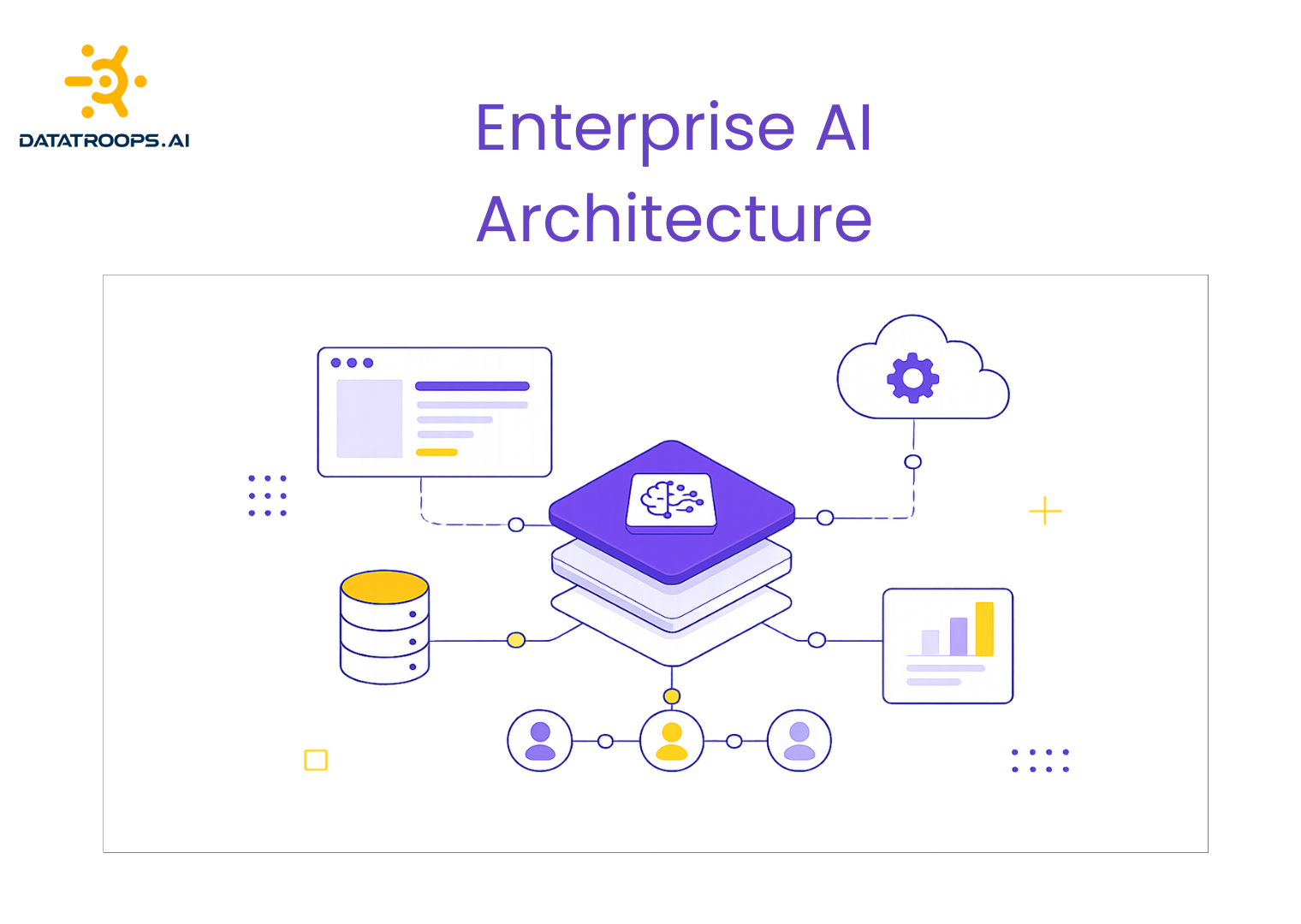
Every team building with large language models eventually hits the same wall. It starts with a brilliant prototype: a clean system prompt, a couple of function tools, and an LLM that handles requests fluidly. Then the application scales. Suddenly that single agent is expected to parse complex PDFs, query an enterprise database, make real-time calculations, verify compliance, and output polished markdown. So you expand the prompt - more edge cases, more instructions, more tools - until it becomes a massive wall of text.
Then the cracks appear. The agent suffers from context distraction: it picks the wrong tool, hallucinates parameters, forgets instructions from the top of the prompt, and becomes slow and expensive to run. Forcing one monolithic model to be the thinker, the manager, the database engineer, and the validator is a recipe for fragility.
If you want an AI system that can reliably run an enterprise workflow, you have to stop building a single software package and start building a digital organization.
This is the blueprint for that shift - how agents are orchestrated, how they communicate without chaotic cross-talk, how they remember across long time horizons, how they hook into external infrastructure, and how we continuously evaluate their execution paths for production-grade reliability.
When you distribute a large problem across multiple specialized agents, the first engineering challenge is defining the shape of the network. Without explicit orchestration boundaries, agents behave like an unmanaged committee - talking over each other, spinning in circles, and burning tokens.
As requirements grow more complex, strict linear or parallel pathways aren't enough. You need systems that self-correct and adapt on the fly.
| Pattern | How it works |
|---|---|
| Loop / Review & Critique | A generator agent drafts a solution; a critique agent with hard business constraints reviews it. On failure, detailed feedback returns to the generator. The loop continues until the work passes a threshold - or hits a max-iteration ceiling to avoid infinite token consumption. |
| Coordinator / Router | A highly capable model acts as a dynamic triage manager, decomposing the macro-problem into milestones and assigning them to specialist sub-agents. Adding a capability is as simple as attaching a new worker node. |
| Agent-as-a-Tool | A primary agent keeps absolute runtime control and internal state, wrapping a secondary agent inside a functional interface. It invokes that agent briefly for a specialized calculation or lookup, then reclaims the thread - treating the tool agent as a stateless utility function. |
Early academic work on multi-agent systems rests on three principles: decentralized control (no central boss), local view (agents only understand their immediate environment), and emergent behavior (global intelligence arises from simple local interactions). The analogy is a flock of birds shifting direction without a leader. But deploy a purely decentralized, peer-to-peer network into production and the flock flies straight into a wall.
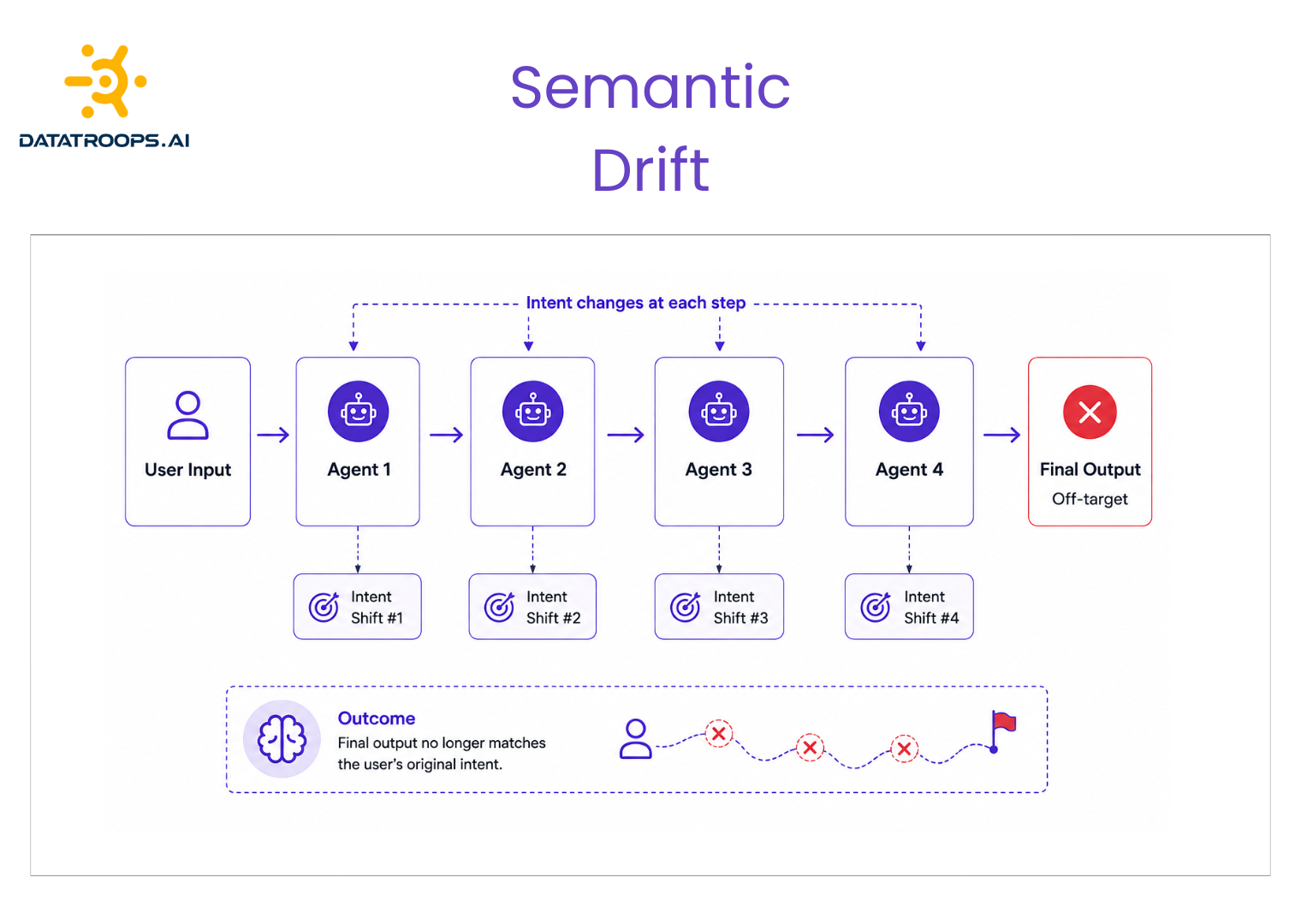
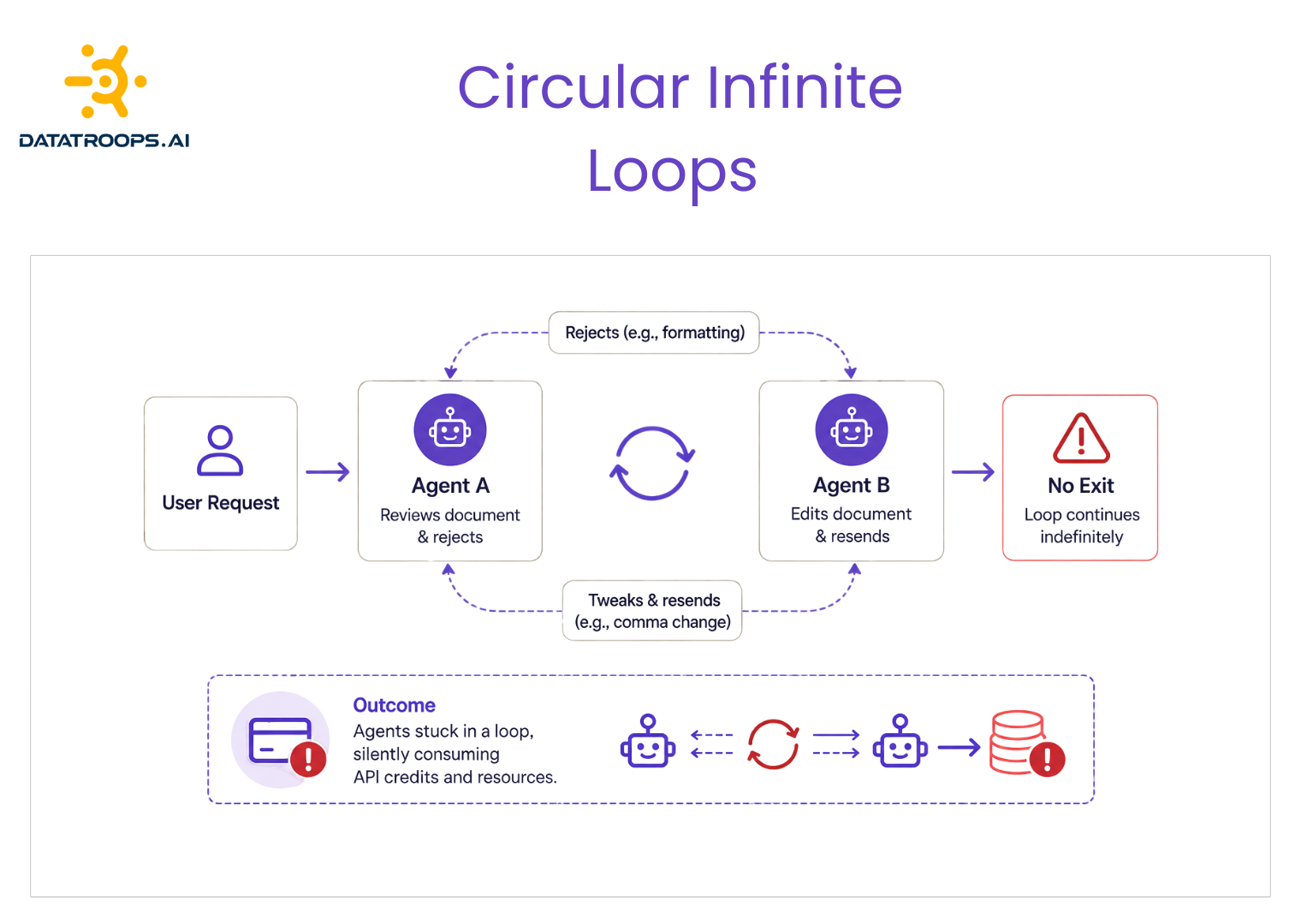
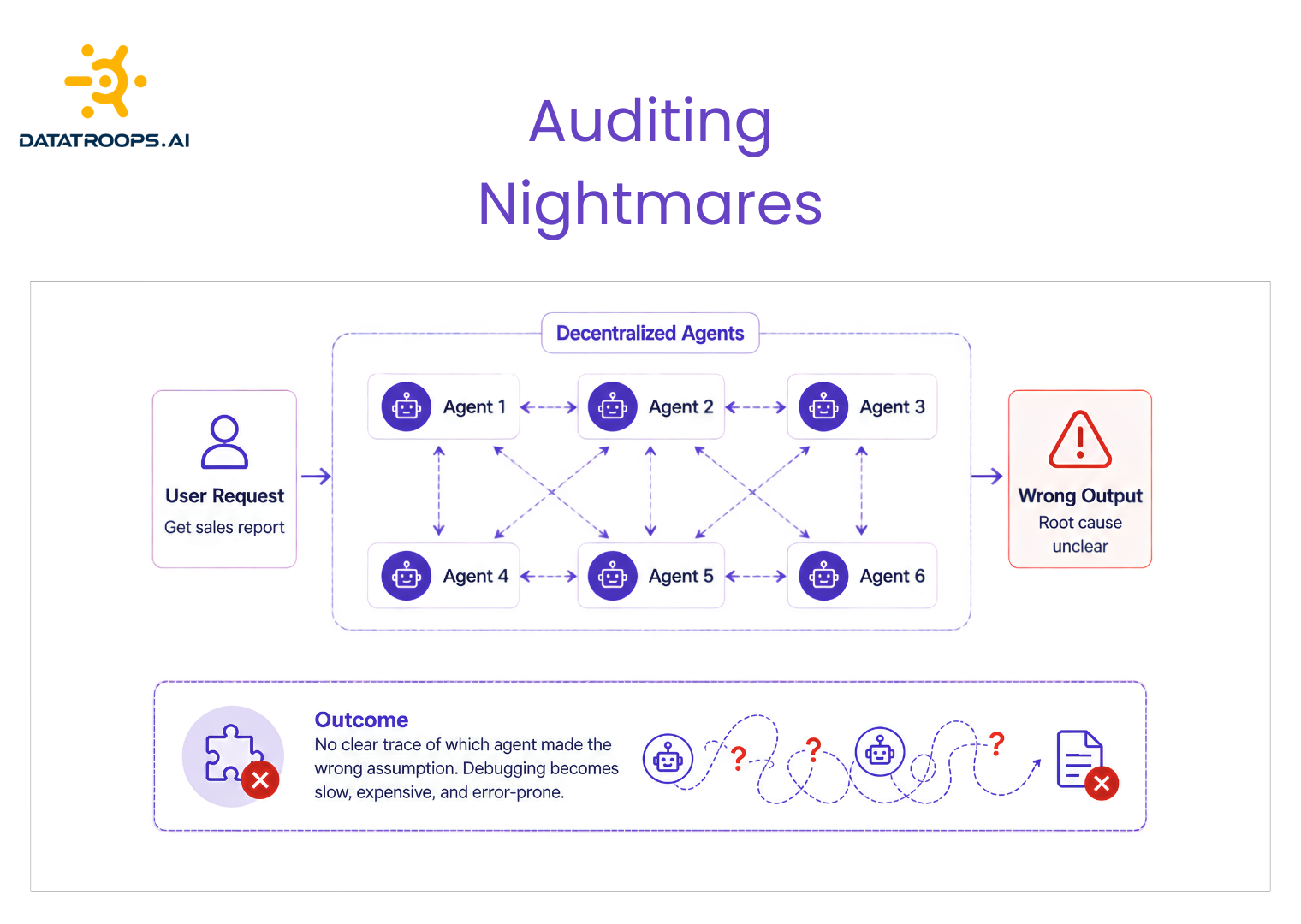
The Single Parent Rule - every sub-agent maps to exactly one managing parent, with no lateral peer-to-peer delegation without reporting back up the stack.
The core of the framework is a central hub - a deterministic state machine or a highly instructed supervisor model. Sub-agents pull specialized data, execute their tools, and send completed packets back to the hub. The hub maintains global state, monitors token budgets, logs telemetry, and serves as the referee for error handling. The result: the focused reasoning of modular specialists, combined with the predictability, safety, and traceability production requires.
A truly intelligent system cannot live inside a single session. If a customer states a dietary restriction on Monday and opens a fresh chat on Friday, starting over destroys the experience. The fix is a 3-layer memory architecture that mirrors human cognition - balancing speed, persistence, and deep semantic recall.
| Layer | What it is | Nature |
|---|---|---|
| 1 · Working | Active session state and event transcripts in high-speed cache | Fast, but cleared on restart or when the thread closes |
| 2 · Persistent | Database + a user-profile store on an explicit key-value schema keyed to a global user ID (e.g. dietary_restriction = Vegetarian) | Survives reboots |
| 3 · Semantic | A vector knowledge bank of extracted facts and multimodal assets | Cross-session conceptual recall |
Each conversation turn follows a four-step pattern:
Layer 3 goes further: conversation logs and multimodal assets pass through an asynchronous pipeline - fact extraction filters noise into standalone insights, vector embeddings capture deep semantic meaning, and automated injected preloading runs a semantic search on every new query, appending relevant facts from months ago before the model even begins to respond.
As the ecosystem grows, teams hit an integration bottleneck: every new capability requires a custom, non-reusable wrapper inside the codebase. MCP is the universal 'USB-C port for AI connectivity.'
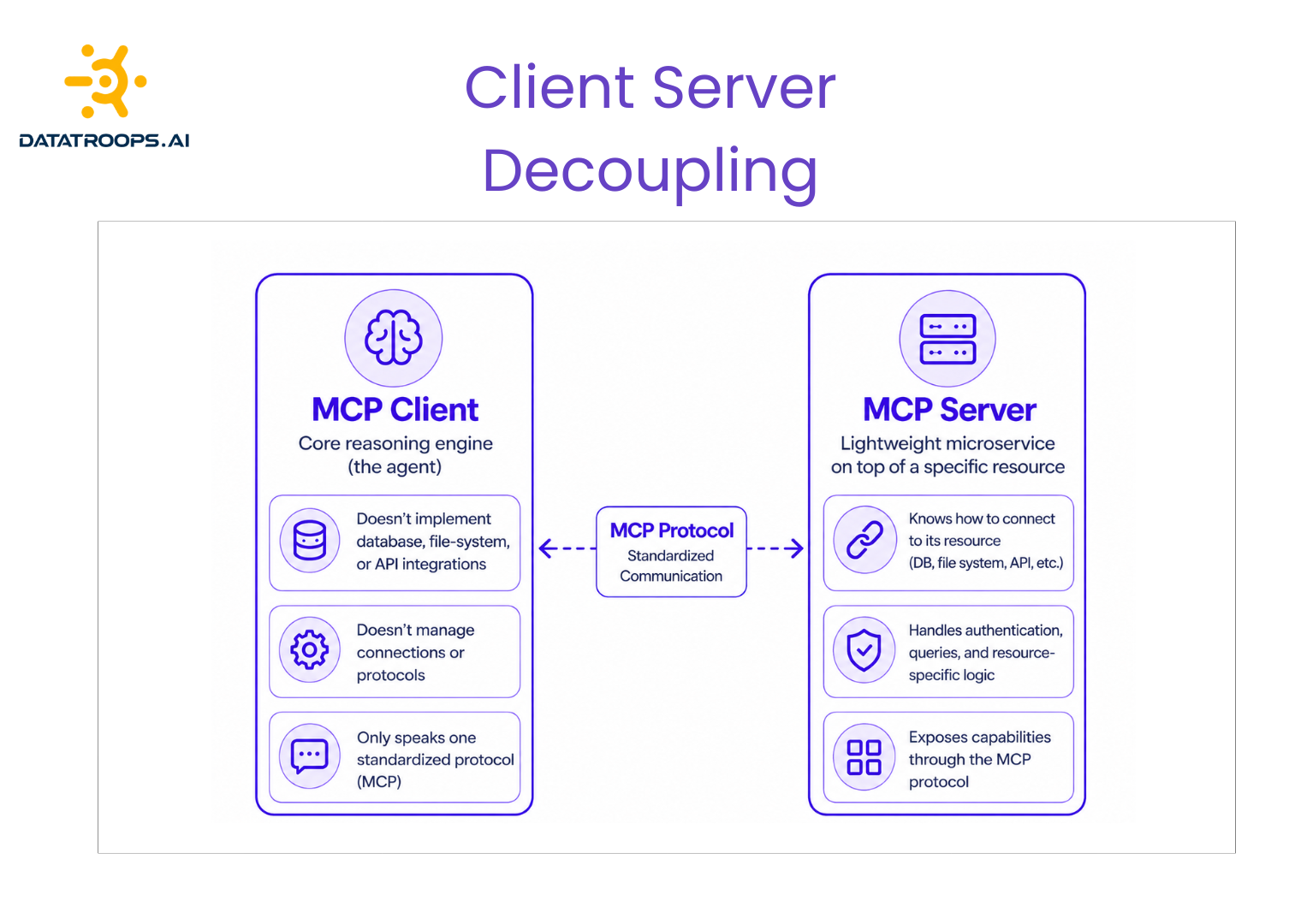
Every server implements two handlers:
Locally, clients talk to servers over fast STDIO loops. In production, servers deploy as standalone containers on scalable runtimes, communicating over Streamable HTTP. Because the server runs independently from the orchestration loop, you can lock down its permissions - restricting a file-system server to one subdirectory, or scoping a database server to read-only views - giving agents real capability without exposing core infrastructure to injection vectors.
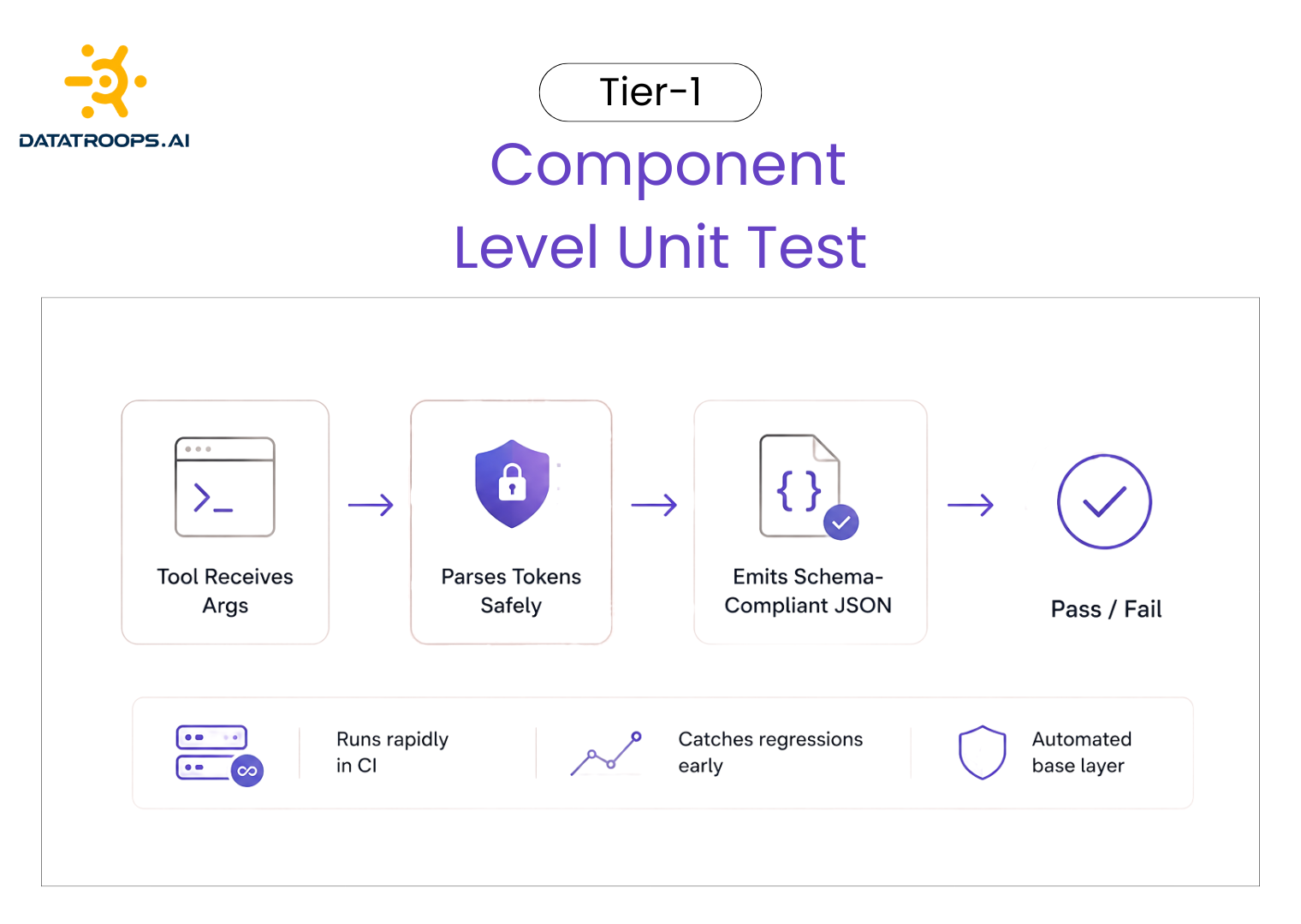
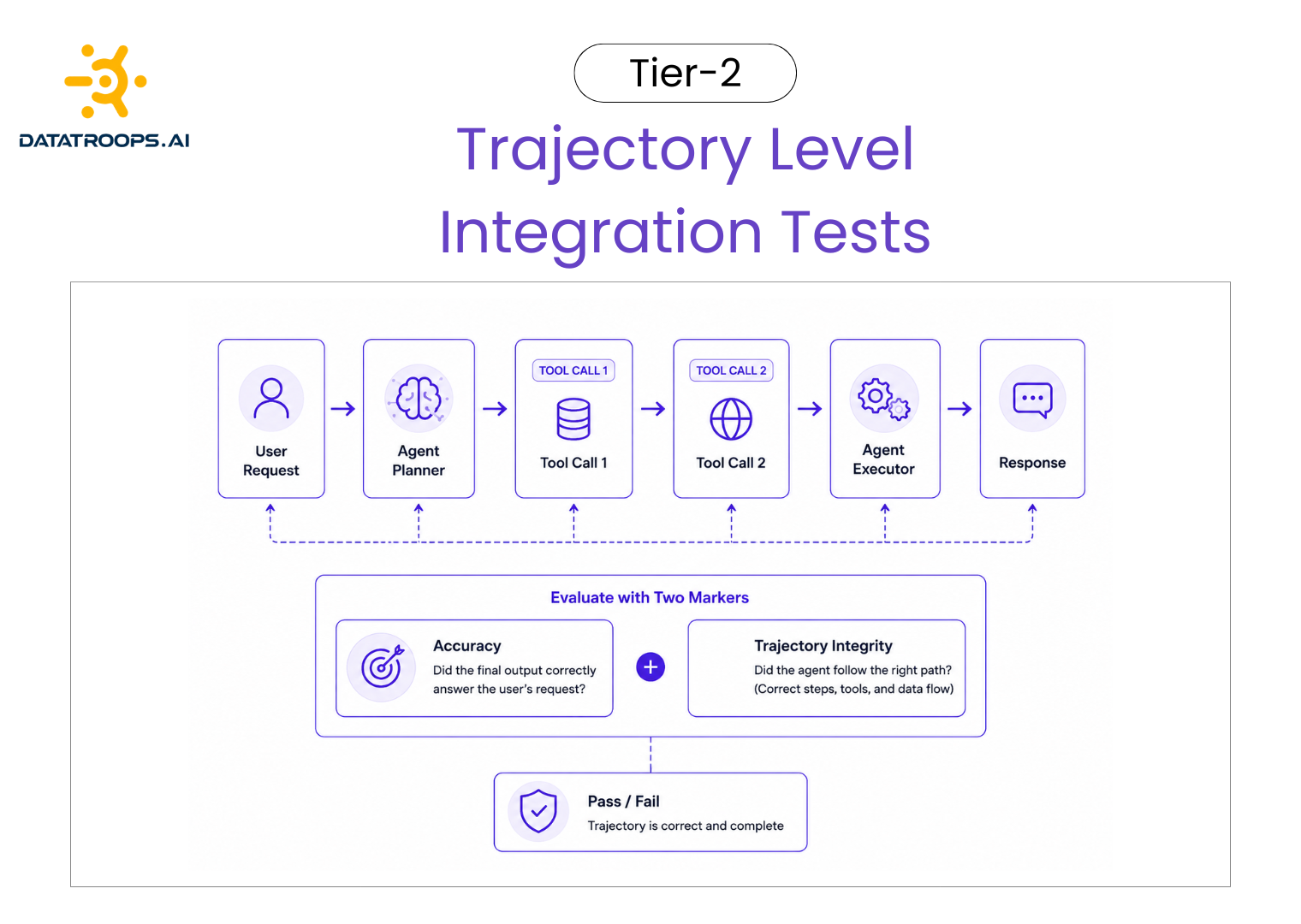
Traditional software relies on deterministic unit tests: input 2 + 2, expect exactly 4. But agents are probabilistic - for the same prompt, an agent may take different reasoning paths, use different tools, and still arrive at a valid answer in different words. Exact string matching produces constant false alarms. So we evaluate the entire system-level execution journey with a three-tier pyramid.
| Marker | Measures | Threshold |
|---|---|---|
| Trajectory Average Score (0.0–1.0) | How closely the real path matches the expected workflow | Strict (~0.8+) |
| Response Match Score (e.g. ROUGE-1) | Content quality of the final answer | Flexible (~0.5) |
Building production-grade AI isn't about finding a better prompt or chasing the latest model. It's about designing a robust, well-coordinated architecture. By decomposing large problems into structured topologies, enforcing centralized orchestration, sharing clean state, layering memory across time, standardizing integration with MCP, and running rigorous trajectory-based evaluation, you can build multi-agent applications that are predictable, secure, and production-ready.
The era of individual prompts is giving way to structured, intelligent agent networks - and this is how you build them.
Schedule a technical deep dive with our AI Ops engineers.
Key takeaways and architectural details Settled for engineers and team leads.
An enterprise AI architect is the person (or team) responsible for designing the structural blueprint that connects agents, data, memory, and integrations into a coordinated system - defining orchestration patterns, state management, and evaluation standards rather than building isolated AI tools.
The five pillars of enterprise architecture are business architecture, data architecture, application architecture, technology architecture, and security architecture. In an enterprise AI architecture specifically, these map to orchestration (business logic), shared state and memory (data), agents and tools (application), infrastructure like MCP (technology), and access control (security).
While frameworks vary, a typical AI architecture stack includes: data ingestion, data storage/foundation, model/orchestration layer, agent layer, memory layer, integration layer (e.g., MCP), and evaluation/monitoring layer - each building on the one below it to turn raw data into reliable, auditable AI behavior.
Enterprise architecture is the broader discipline governing how an organization's systems, data, and processes fit together. Enterprise AI architecture is a specialized subset of that - focused specifically on how AI agents, models, memory, and integrations are structured to operate reliably within that broader system.
Deploy autonomous agents inside your environment to investigate alerts, diagnose incidents, and generate verified fixes.