


AI & Enterprise Technology Content Specialist
On-call is broken. Engineers burn out, alerts pile up, and incident response often relies on tribal knowledge locked inside a few senior engineers' heads. AI SRE agents offer a fundamentally different approach - autonomous investigation, parallel triage, and continuous learning from every incident. This blog explores what AI SRE agents actually do, why traditional on-call fails, and where human accountability must remain.
AI for on-call refers to the use of artificial intelligence systems - often called AI SRE agents or AI on-call engineers - to help detect, triage, and investigate production incidents alongside human responders. Instead of an engineer manually opening five dashboards at 2am, an AI for on-call system listens for alerts, pulls in the relevant logs and metrics, checks recent deployments, and proposes a root cause before a human even opens their laptop.
The term AI SRE (AI Site Reliability Engineer) is often used interchangeably with AI for on-call. Both describe the same category of tool: a virtual teammate that handles the repetitive, time-consuming parts of incident response - alert correlation, log queries, runbook execution - so the human on-call engineer can focus on judgment calls rather than data gathering.
The core thesis behind every serious AI for on-call implementation is simple: AI leads the investigation, humans control the execution. The agent does the digging; the person on-call decides what happens next.
Modern engineering teams are running more services, across more environments, with tighter uptime expectations than ever before. A single product might depend on dozens of microservices, spread across multiple clusters, each with its own alerting rules and dashboards. When something breaks, the on-call engineer is expected to piece together context from a dozen disconnected tools - often at the worst possible hour.
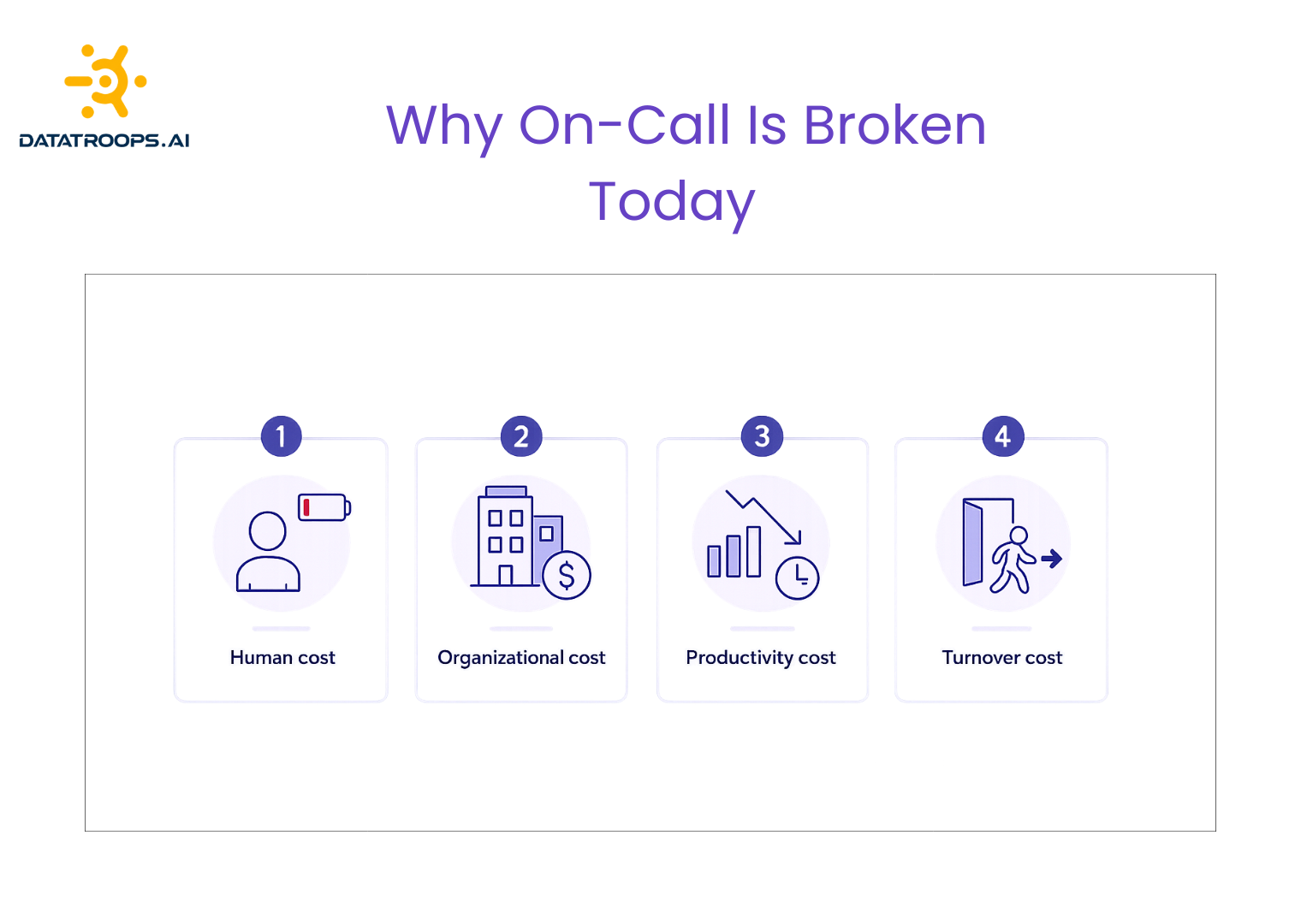
Traditional rule-based automation - a script that restarts a service when CPU crosses a threshold - helps with some of this, but it can't reason about why something broke. That gap is exactly what AI for on-call and AI SRE agents are built to close.
Most AI for on-call systems follow a similar lifecycle, whether they're built in-house or bought as a platform. This lifecycle is what separates AI for on-call from simple alerting automation - it's not just 'if X, then Y,' it's an agent that can investigate, reason, and adapt.
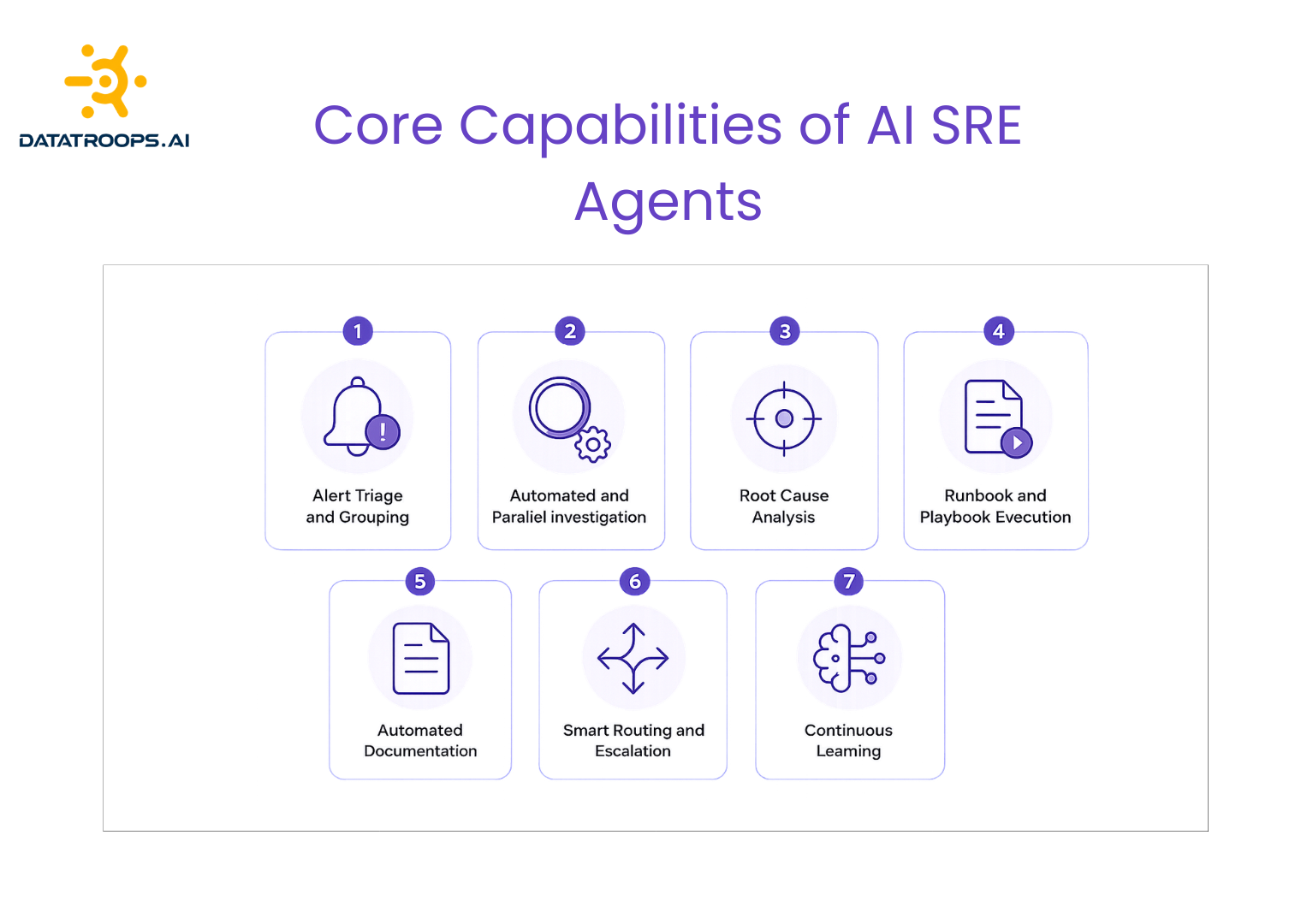
AI SRE agents are not a single feature - they're a collection of capabilities that work together to automate the investigation and resolution pipeline. Here are the seven core capabilities that define an effective AI SRE agent.
Vendor claims about AI for on-call can sound abstract until you see them next to real performance benchmarks. The numbers below reflect what teams typically report once an AI SRE agent is actively investigating alerts - from how fast context gets pulled together to how much faster incidents get resolved. Use these as a baseline for what 'working well' looks like when evaluating your own AI for on-call rollout.
| Metric | What It Looks Like With AI SRE Agents |
|---|---|
| Response latency | Context-gathering typically completes within 1-5 minutes of an alert firing |
| Investigation accuracy | Advanced multi-agent retrieval setups target 90%+ context accuracy across logs and documentation |
| MTTR impact | Organizations commonly report 50-70% reductions in mean time to resolution |
| Escalation volume | Fewer alerts reach humans directly, as more low-ambiguity issues are resolved or pre-diagnosed automatically |
These figures vary by implementation and maturity, but they represent the general range teams report after adopting AI for on-call tooling in production environments.
The most important aspect of AI SRE is knowing where to draw the line. AI agents should investigate, correlate, and recommend - but certain decisions must remain with humans.
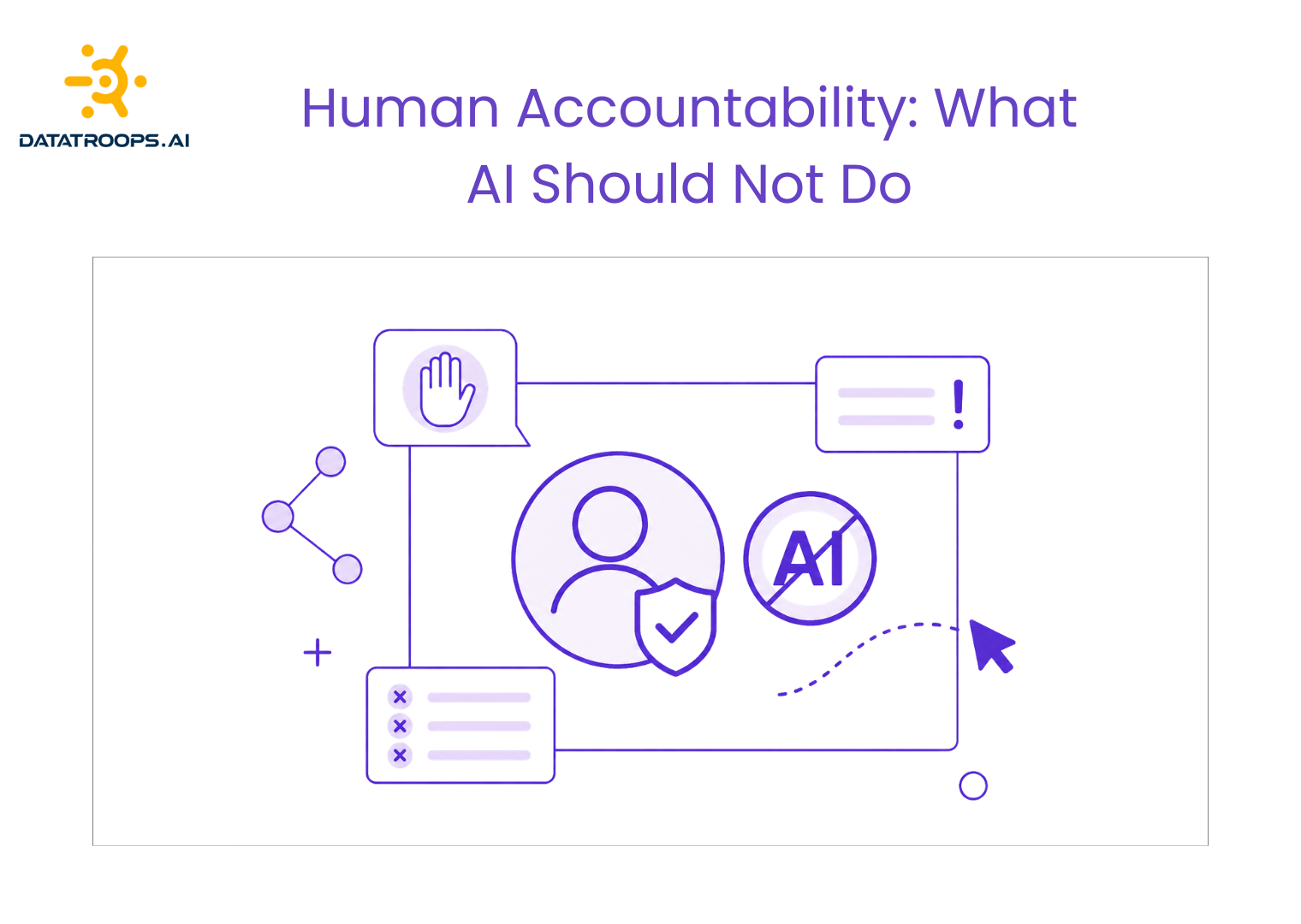
No matter how confident an AI SRE agent is in its root cause hypothesis, any change that touches production should still pass through human approval before it's executed. Confidence isn't the same as correctness, and an agent that's right 95% of the time will eventually be wrong in a way that matters - usually at the worst possible moment.
This boundary isn't a limitation of the technology - it's a deliberate design choice. The goal is not to remove humans from the loop - it's to remove humans from the tedious, repetitive parts of the loop so they can focus on the decisions that actually require their expertise.
The difference between manual and AI-powered on-call isn't just speed - it's consistency. Here's how the two models compare across the parts of incident response that matter most.
| Aspect | Manual On-Call | AI for On-Call |
|---|---|---|
| Alert routing | Based on rotation or tribal knowledge | Matched to the right responder using context and history |
| Investigation | Engineer manually checks dashboards one by one | Agent queries logs, metrics, and traces in parallel |
| Escalation | Human-judged, often under stress | Policy-based and consistent |
| Documentation | Written manually after the fact | Drafted automatically from the incident timeline |
| Fatigue | High - constant interruption and false alarms | Reduced - noise is filtered before it reaches a human |
| Response speed | Minutes to hours depending on familiarity | Often minutes, since context is pre-gathered |
Before adopting any AI for on-call tool, evaluate it against the following criteria.
AI SRE agents are not a futuristic concept - they're being deployed in production by companies today. The technology has reached a maturity point where autonomous investigation and resolution of common incidents is not just possible, but reliable.
The teams that adopt AI SRE agents now will have a significant competitive advantage: their engineers will spend more time building and less time firefighting. Their MTTR will be lower, their incident response will be more consistent, and their best engineers won't burn out and leave.
The future of on-call isn't about finding better humans to handle the pager. It's about building intelligent agents that handle the investigation so humans can focus on the decisions that truly matter. If you're evaluating AI for on-call for your own team, start small: layer AI-assisted investigation into your existing workflow first, measure the impact on MTTR and engineer satisfaction, and expand autonomy only as trust is earned.
Schedule a technical deep dive with our AI Ops engineers.
Key takeaways and architectural details Settled for engineers and team leads.
AI for on-call is the use of AI agents to detect, triage, and investigate production incidents alongside human engineers - handling alert correlation, log analysis, and root cause investigation automatically.
No. AI for on-call is designed to handle the repetitive investigation work, while humans retain approval authority over any production-impacting change. It's augmentation, not replacement.
Yes, largely. "AI SRE" and "AI for on-call" are used interchangeably to describe AI agents that support incident response - AI SRE emphasizes the reliability-engineering role, while AI for on-call emphasizes the alerting and response workflow.
For low-ambiguity, well-documented issues, yes - many AI for on-call systems can run pre-approved remediation steps autonomously. For anything novel or high-risk, the system escalates to a human instead of acting alone.
Track MTTR (mean time to resolution), MTTD (mean time to detection), the percentage of alerts resolved without human escalation, and on-call engineer satisfaction over time.
Deploy autonomous agents inside your environment to investigate alerts, diagnose incidents, and generate verified fixes.